
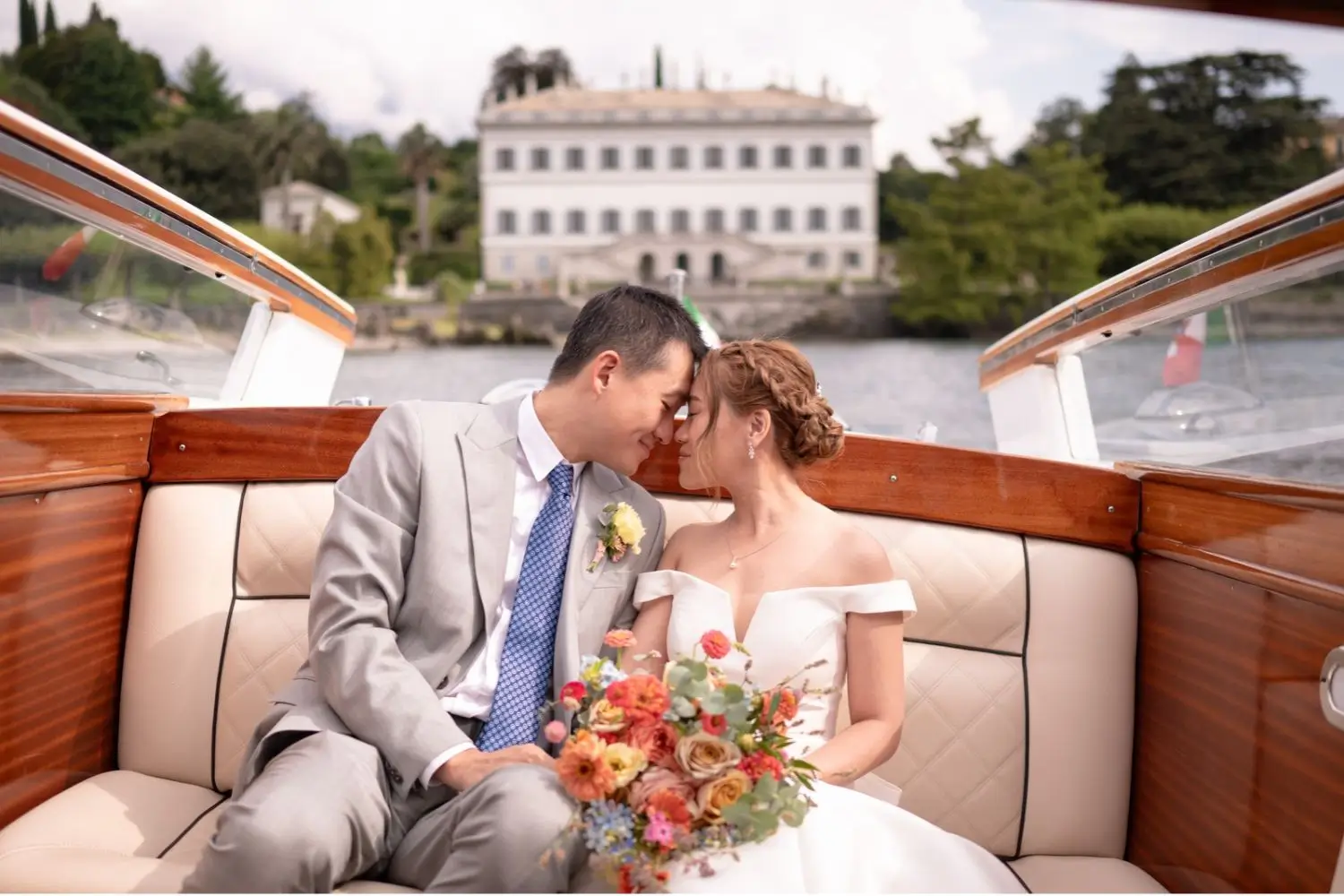
Of all the things that make up a wedding day, most don’t last. The flowers fade within days. The cake is eaten. The music stops at the end of the evening, and with it, a celebration that took months to plan quietly closes. But there is one element that works entirely differently from everything else: a wedding film doesn’t end with the day itself. It’s the only investment of the entire celebration that doesn’t lose value over time — it gains it, year after year, quietly and steadily.
And yet, in the planning of a wedding, videography is often one of the last things to be considered, and sometimes one of the first to be cut when the budget tightens. What follows isn’t a list of arguments to convince you to spend more. It’s an attempt to give the question “is it really worth it?” an honest answer — one that takes into account what a wedding film actually is, and what it becomes as the years pass.
From Expense to Asset: Why a Wedding Film Gains Value Over Time
Most wedding expenses are exhausted the moment they are incurred. The catering is wonderful on the day of the reception, and the day after, it no longer exists. The flowers are beautiful during the ceremony and wilt within a few days. The dress is put away, the makeup fades. Almost everything that makes that day unforgettable belongs, by its very nature, to that day alone.
A wedding film is the exception. It doesn’t get used up: it continues to exist, and its emotional value grows over time in a way that surprises nearly every couple who experiences it. At the time of booking, many couples consider it a significant but non-essential expense. Years later — when memories begin to blur at the edges, when the texture of that day thins in the mind — it becomes something far more precious than they had imagined.
And the data makes this clear: the perceived value of wedding videography increases dramatically after the wedding day itself, rising from 54% to 79% of appreciation among couples (WEVA International, 2003). This isn’t a neutral statistical footnote. It means that more than half of the couples who were unsure about the investment at the time of booking later consider it one of the most meaningful decisions of their entire celebration.
Three factors explain this reappraisal, and they’re worth understanding before making any budget decision.
- The first is time. The further you move from the wedding date, the more precious moving images become: they are the only place where that exact day, at that exact age, with those exact people, continues to exist. Memories reorganise themselves — they simplify, select, sometimes magnify certain moments and erase others. A film doesn’t do that. It remains precise, faithful, fixed in the way it was filmed.
- The second factor is generational legacy. A wedding film outlives the couple who commissioned it. It becomes something children watch to see their parents young, something grandchildren explore to understand where their family’s story began. No other wedding expense carries this kind of temporal reach.
- The third — perhaps the most underestimated — is the memory of voice. Photographs fix a face with extraordinary precision, but only video preserves the sound of a voice: a promise spoken with a trembling voice at the altar, a best man’s improvised toast, the laugh of a parent. It is often exactly this — not the images, but the voices — that couples describe as the most precious detail of their film, years later.
Preserving Voices and Movement Beyond the Still Photograph
Photography is extraordinary at doing what it does best: fixing a single instant with a formal completeness that no other medium can match. A well-composed image is permanent in an almost magical way — it holds light, composition, emotion compressed into a single frame that lasts forever.
But a wedding is not a single instant. It is a sequence of moments, sounds, movements, glances exchanged between people. It’s the rhythm of the first dance shifting as the song reaches its chorus. It’s the tremor in a father’s voice during the toast. It’s the exact laugh that follows an unplanned joke, the pause before saying “I do,” the sound of applause breaking through the room. None of this belongs to the domain of photography — not because photography is limited, but simply because it was never designed for it.
A premium wedding film captures what a photograph cannot physically give back. And years from now, it is often these sensory details — not the still images — that truly bring back how you felt in that moment: the emotional texture of the day, not just its appearance.
Cost vs. Value: Understanding the Difference in Luxury Wedding Videography
When approaching the question of budget for videography, the fundamental distinction to keep in mind is the one between cost and value. Cost is what you pay at the moment of booking. Value is what that investment continues to give back over time — in technical quality, in narrative depth, in the faithful preservation of memories. The two don’t necessarily align, and the gap between them is often wider than people expect.
According to the most recent market data, the average investment for a wedding video sits at around $2,300, while premium cinematic productions range between $5,000 and $10,000 or more (The Knot, 2026) — figures referring to North American and international market averages. This difference is not arbitrary, and it doesn’t simply reflect the length of the final video or the quality of the equipment used. It reflects something deeper: hundreds of hours of post-production, a narrative approach built on a coherent artistic vision, and a level of creative direction that a standard production simply isn’t designed to offer.
| Standard Production | Premium Production |
| A single operator, a single camera | Multi-camera setup with a dedicated creative director |
| Basic editing with standard music licensing | Cinematic colour grading and personalised sound design |
| Limited hourly coverage | Full-day coverage, with discreet documentary-style filming |
| Short highlight reel only | Highlight film plus full-length feature-style edit |
The difference, in short, is not between “a beautiful video” and “an even more beautiful video.” It is between two conceptually different products: one that documents, and one that tells a story. One that captures what happened, and one that manages to give back how it felt while it was happening.
The Neuroscience of Emotional Recall: How Film Activates Multisensory Memory
There is a deep reason — not merely emotional, but neurological — why watching your own wedding film produces an effect so different from looking at photographs. The human brain doesn’t store memories the way a photograph stores an image: it doesn’t preserve them as frozen instants, but as experiences — ones where multiple senses collaborated to build something the mind then consolidated over time.
Video engages sight, hearing, colour and movement simultaneously. It is precisely this sensory layering that allows a wedding film to transport a couple back to that day in a way that is far more vivid and immediate than a still photograph ever could.
And this isn’t simply intuition: it is supported by scientific research. The human brain processes 83% of information through sight and 11% through hearing, making multisensory integration the primary vehicle for long-term memory recall (Frontiers in Psychology, 2025). When vision and hearing work together — exactly as they do in a film — memory is activated at a level that neither sense can reach on its own.
This has concrete implications for how memory functions over time. It’s not just about “remembering more”: it’s about remembering with greater precision, with deeper emotional intensity — and with a quality of presence that is difficult to describe until you experience it. Many couples describe the experience of watching their own film as fundamentally different from watching anything else: not as spectators, but as participants.
Why Clean Audio Makes Vows and Speeches Unforgettable
If the visual dimension is what draws attention when choosing a videographer, it is often the audio dimension that proves most precious in the years that follow. Clean, well-recorded audio is what transforms a wedding video into a genuine emotional time capsule — something that doesn’t just show the day, but lets you feel it.
Vows, toasts, improvised speeches, the small phrases exchanged quietly between the couple: all of this carries a meaning that a video without proper sonic care simply cannot preserve. Not because the words are missing, but because the exact timbre of that voice in that moment is missing — the inflection that betrays held-back emotion, the pause before the most important words are spoken.
Research shows that the memory of emotionally charged voices is retained and consolidated over time significantly more strongly than neutral speech (Frontiers in Behavioral Neuroscience, 2019) — one more reason why the importance of professional audio in luxury wedding films should never be underestimated when choosing a premium production.
What Sets a Premium Film Apart: Artistry, Equipment, and Storytelling
Understanding the value of a premium wedding film means understanding what concretely distinguishes it from a standard production — and the answer doesn’t come down to equipment alone, even though equipment matters. The gap between an amateur video and a high-end cinematic production concerns something harder to quantify: artistic taste, technical mastery, and a narrative instinct built only through years of experience on set.
A high-calibre studio doesn’t simply document a wedding: it interprets it. That means far more than having better cameras or a drone. It means arriving at the day with a narrative vision already formed — knowing in advance which light is worth seeking out, which moment needs to be anticipated rather than chased, which sequence of images will build the emotional arc of the final film. It means working with discretion, almost invisibly, without ever interrupting the natural flow of the day — because authentic emotion is captured, not produced.
Four elements, taken together, define the level of a premium production:
- The first is cinematic vision: an eye trained in composition, light and rhythm, capable of transforming raw footage into a coherent visual story where every frame carries precise narrative weight.
- The second is equipment: multi-camera setups, stabilisation systems, and professional audio gear, built to handle the unpredictable and unrepeatable nature of every moment of the day.
- The third is discreet, documentary-style direction: the ability to capture authentic emotion without interfering with the natural unfolding of events — being present without being felt.
- The fourth is bespoke post-production: colour grading, sound design, and editing refined over many hours, not automated in a few minutes, with a craftsmanship that shows in every scene of the final film.
These four elements are not independent of one another: they feed each other and shape something that is greater than the sum of its parts. To explore how creative direction translates into a specific visual approach — from documentary to editorial — it’s worth reading our guide on modern wedding film styles. And to understand the difference in role between the person operating the camera and the one directing the cinematic project as a whole, the piece on the difference between a videographer and a cinematographer is a useful starting point.
Avoiding Post-Wedding Regret: The Numbers Behind Missing Video Coverage
There is a specific form of regret that surfaces consistently among couples in the months and years after their wedding: not having booked a video service, or having chosen a production that wasn’t able to give the day back in its entirety. It’s a regret with one defining characteristic: it arrives when there is no longer anything to be done about it. The day has passed, the moments have closed in on themselves, and no photograph — however beautiful — can restore the sound of that voice, the rhythm of that moment, the emotion that was moving through the room.
Often the reason for this choice is understandable: a wedding budget stretches thin quickly, and videography is one of the items that seems most expendable at the planning stage. The flowers can be seen, the catering can be tasted, the dress can be worn. A wedding film, on the other hand, feels abstract until it exists — and it stops feeling abstract precisely at the moment when it can no longer be commissioned.
The picture is consistent: the same research that documents the growth in perceived value of videography from 54% to 79% after the wedding (WEVA International, 2003) also tells the story of how many couples only recognise the real value of a film when it is already too late to book one. It isn’t a story of regret over something they couldn’t afford: it is, more often than not, the story of a decision made with criteria that, in hindsight, turned out to be the wrong ones.
Frequently Asked Questions About Investing in a Premium Wedding Film
Is a luxury wedding film worth the investment if we already have a photographer?
Yes — and the reasons go beyond simply having more content. Photography captures how a moment looked: its shape, its light, its composition. Video captures the movement, the music, the speeches, and the tone of every voice in the room. The two don’t overlap: they complement each other, giving the couple a fuller, more emotionally complete account of the day. One without the other leaves something irrecoverable.
What is the average price range for a premium wedding film?
While entry-level productions start at lower figures, premium cinematic productions typically range between $5,000 and $10,000 or more. This price reflects high-resolution equipment, discreet on-set direction, complex sound design, and hundreds of hours of bespoke editing — an investment of time and resources that cannot be compressed without the quality of the result suffering in a meaningful way.
Why do so many couples regret not booking a wedding videographer?
Because many couples discover only after the event how quickly the day passed — and how little memory alone manages to retain. Without a film, it becomes impossible to relive the vows as they were spoken, the spontaneous laughter, or the voices of family members during the speeches. Research shows that the vast majority of those who choose not to book video report a strong sense of regret in the months that follow — and that this regret tends to grow, not diminish, as time passes.
How far in advance should we book a high-end wedding filmmaker?
Because high-end filmmakers take on a limited number of weddings each year — to guarantee a bespoke level of quality at every stage of production, from set to post-production — it is advisable to book between 9 and 15 months before the wedding date, with even more lead time for peak-season dates or destination weddings at the most sought-after venues in Italy.
Want to make sure your most important day is told the way it deserves? Explore our luxury wedding video services and begin planning a film that will only grow in value as the years pass.
Planning a Destination Wedding in Italy: The Ultimate Cinematic Guide
Plan your 2027 Italy destination wedding with our cinematic guide. Expert tips on top venues in Tuscany, Lake Como & Amalfi to ensure your luxury wedding film becomes a timeless legacy.
Difference between cinematographer and videographer: understanding the art behind wedding footage
Understanding the difference between videographer and cinematographer is crucial for your wedding video: approach, vision and storytelling, with a focus on destination weddings in Tuscany.
The Rise of Storytelling: How Narrative Techniques Transform Wedding Videos
Thanks to storytelling, a wedding video is transformed into an authentic tale: narrative structure, emotions, sound and Tuscan locations for a personal, engaging and timeless video.


